Before the first piece of heavy machinery arrives on a job site, before any permits are pulled, and long before any walls come crashing down, there is a critical phase of work that often goes unnoticed by property owners yet determines the success or failure of the entire project. This is the site survey. For a mammoth demolition contractor in Toronto, the initial site visit is far more than a casual walkthrough. It is a comprehensive investigative mission that uncovers the hidden secrets of a structure, assesses potential risks, and lays the groundwork for a safe, efficient, and legally compliant demolition. The experts who conduct these surveys bring years of experience and a trained eye to the task, understanding that what they discover in those first few hours on site will shape every decision that follows, from the choice of equipment to the final price quoted to the client.
The Purpose Beyond the Walkthrough
A site survey serves multiple essential purposes that extend far beyond simply looking at the size of a building. It is the moment when the demolition contractors Toronto transitions from a general understanding of the project to a detailed, site-specific plan of action. During this visit, experts evaluate the structural integrity of the building, identifying whether walls are load-bearing, whether floors can support heavy equipment, and whether there are any signs of instability that could pose a danger during demolition. They assess access points for machinery, determine the best locations for debris staging, and evaluate the proximity of neighboring structures that may require protection. This on-the-ground intelligence transforms a theoretical project into a practical, executable plan, ensuring that when work begins, there are no unpleasant surprises waiting behind closed doors.
Uncovering Hidden Hazards
One of the most critical functions of a professional site survey is the identification of hidden hazards that could endanger workers or the public. In Toronto's diverse building stock, which spans centuries of construction practices, these hazards can take many forms. The surveyor looks for visual clues that might indicate the presence of asbestos-containing materials, such as older insulation, textured ceilings, or vintage floor tiles. They note areas where lead paint might be present. They search for signs of mold, water damage, or rodent infestations that could create health risks during demolition. They also identify potential chemical hazards, such as abandoned oil tanks in basements or industrial residues in former manufacturing spaces. By flagging these issues early, the contractor can arrange for proper testing and abatement before demolition begins, protecting everyone involved and preventing costly work stoppages later.
Mapping Utility Connections and Hidden Infrastructure
Beneath the floors and behind the walls of every building lies a complex network of utility connections that must be addressed before demolition can proceed. During the site survey, experts work to trace the pathways of electrical service, gas lines, water pipes, and sewer connections. They identify the locations of shutoff valves and main disconnects, and they note any abandoned lines that may still contain hazardous materials or unknown connections. This mapping is essential for coordinating utility disconnections with the appropriate service providers and for ensuring that no live lines are accidentally severed during the demolition process. In older buildings, this can be particularly challenging, as decades of modifications may have created a confusing patchwork of active and abandoned infrastructure that requires careful unraveling.
Assessing Structural Integrity for Safe Demolition
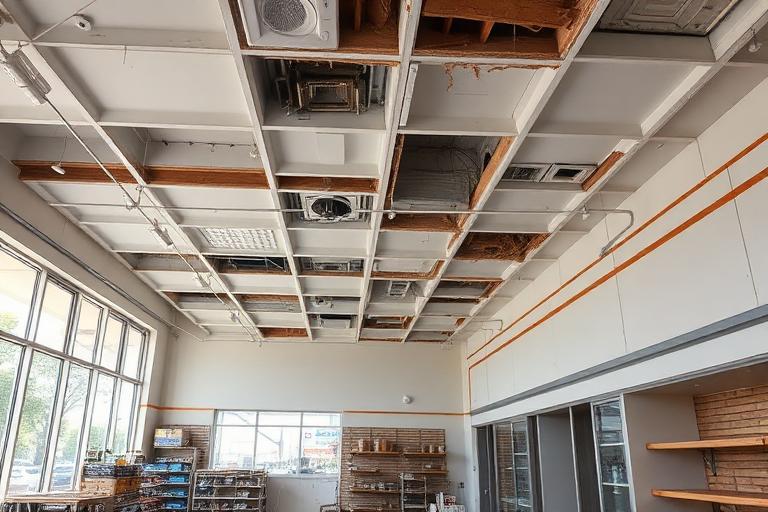
Not every building comes down in the same way, and the structural condition of a property heavily influences the demolition methodology. During the site survey, experts evaluate the building's framing, foundation, and overall stability. They look for signs of deterioration, such as rotting wood, spalling concrete, or corroded steel, that could cause a structure to behave unpredictably during demolition. They assess whether the building can support the weight of heavy equipment if interior demolition is planned for upper floors. They also evaluate the connections between the building and its neighbors, particularly in Toronto's dense row-house neighborhoods, where shared walls require careful sequencing to avoid damaging adjacent properties. This structural assessment informs everything from the sequence of demolition to the type of equipment that will be used.
Evaluating Environmental and Logistical Constraints
Toronto's urban environment presents a unique set of logistical challenges that must be accounted for in any demolition plan. During the site survey, experts evaluate the surrounding context with a critical eye. They note the width of adjacent streets and alleys to determine whether large trucks can maneuver for debris removal. They assess parking restrictions and delivery windows that may limit when equipment can arrive or depart. They identify nearby schools, hospitals, or residential buildings that may require enhanced noise and dust control measures. They evaluate the location of trees, public sidewalks, and utility poles that must be protected. This logistical reconnaissance ensures that the demolition plan is not only safe and efficient but also respectful of the neighborhood and compliant with municipal bylaws.
The Role of Technology in Modern Site Surveys
While experienced eyes remain the most valuable tool in any site survey, modern technology has dramatically enhanced the accuracy and comprehensiveness of these assessments. Many Toronto demolition experts now employ drones to capture aerial imagery of roofs and upper facades that would be dangerous or impossible to inspect from the ground. Laser scanning and 3D modeling technologies create precise digital replicas of structures, allowing engineers to analyze load paths and plan demolition sequences with unprecedented accuracy. Thermal imaging cameras can detect hidden moisture issues or electrical hotspots behind walls. Ground-penetrating radar can locate underground storage tanks or buried foundations. These technological tools complement traditional inspection methods, providing a richer dataset upon which to base demolition plans and cost estimates.
Translating Findings into Actionable Plans
The ultimate value of a thorough site survey lies in how its findings are translated into actionable plans. Following the site visit, the demolition experts compile their observations into comprehensive reports that guide every subsequent phase of the project. These documents inform the hazardous materials abatement strategy, the structural demolition sequence, the equipment selection, and the waste management plan. They provide the basis for accurate cost estimating, ensuring that the quote provided to the client reflects the true complexity of the work ahead. They also serve as essential documentation for permit applications, demonstrating to city officials that the proposed demolition has been carefully planned with full awareness of site conditions. In this way, the site survey becomes the foundation upon which a successful, safe, and predictable demolition project is built.


Share this page with your family and friends.